
Charles Henry
“Knowing death at such a young age amplifies the importance of everything.”
Charles Henry’s mother died at home from cancer when he was fourteen. While his mother’s death made him more independent, he wonders if the converse is also true – that the welcome continued support of her friends conditioned him to look to others for guidance.
Not long before she died in 1994, Charles Henry’s mother called her teenaged son to her bedside, saying they needed to have “a conversation”.
As Charles sat with her, they talked about her illness and approaching death, and she asked if he had any questions. After thinking for a bit, he asked her, “What do you want me to do with my life?”
“Just do whatever makes you happy,” she replied.
“That has always felt like the most important conversation I've ever had because she opened up,” says Charles. “I knew we would have to talk about her dying, and I was just fourteen so I didn't know what to talk about when she asked that question, but I thought to ask that. She was very non-prescriptive about everything, but I feel that if we hadn’t had that conversation, I would always have wondered whether I was doing what my mother would have wanted.
“I’ve always valued that conversation as a way of me being accepting of what was happening. While you can never get full closure from the death of a parent, I think it gave me some sense of closure.”
In his early forties when we talk in wintry Wellington one evening, Charles has now lived half his life in New Zealand. The first half was spent in the United States, as a native of Illinois, growing up in a small university town. Charles’s mother had a wide range of educational, church, and social involvements, and worked as a substitute teacher. His father was a philosophy professor at the local university.
Alongside Charles’s job, which centres on building electric vehicle charging networks, he’s a cellist who gigs on the Wellington scene whenever he can. Charles has been playing the cello since he was three, and his love of music remains “a nice connection” to his parents, especially his mother, who would accompany him on the piano before she died when Charles was barely in his teens.
It was cancer. Her second bout. Her first was when Charles was ten or so, but she’d recovered. Then, in October 1993, she received another diagnosis.
“I remember being told – by the doctors or my parents, or even a hospice worker, I can’t remember – that it was not going to be survivable this time. They were very clear about that. I think I took in that information quite logically and unemotionally at that point,” he says.
Charles’s mother received hospice care in their home, and, while he went on doing all that fourteen-year-old boys do, Charles also spent a lot of time with her until the following April when she died, just as spring was shouldering winter aside in the mid-western state.
Over those months Charles would sit with his mother, maybe play cello to her. He’d run through in his mind what life might be like without her. “I was anticipating it, thinking, ‘I’m this way now, but what will I be like after?’ I think that’s carried through to how I am now, where if I know something may be life changing, I anticipate the thing and try to pre-condition myself to know what it would be like afterwards. That's a weird memory or sensation to have, now I think about it. It’s just the way I process things. Her death took about six months and I was fully present for its whole progression.”
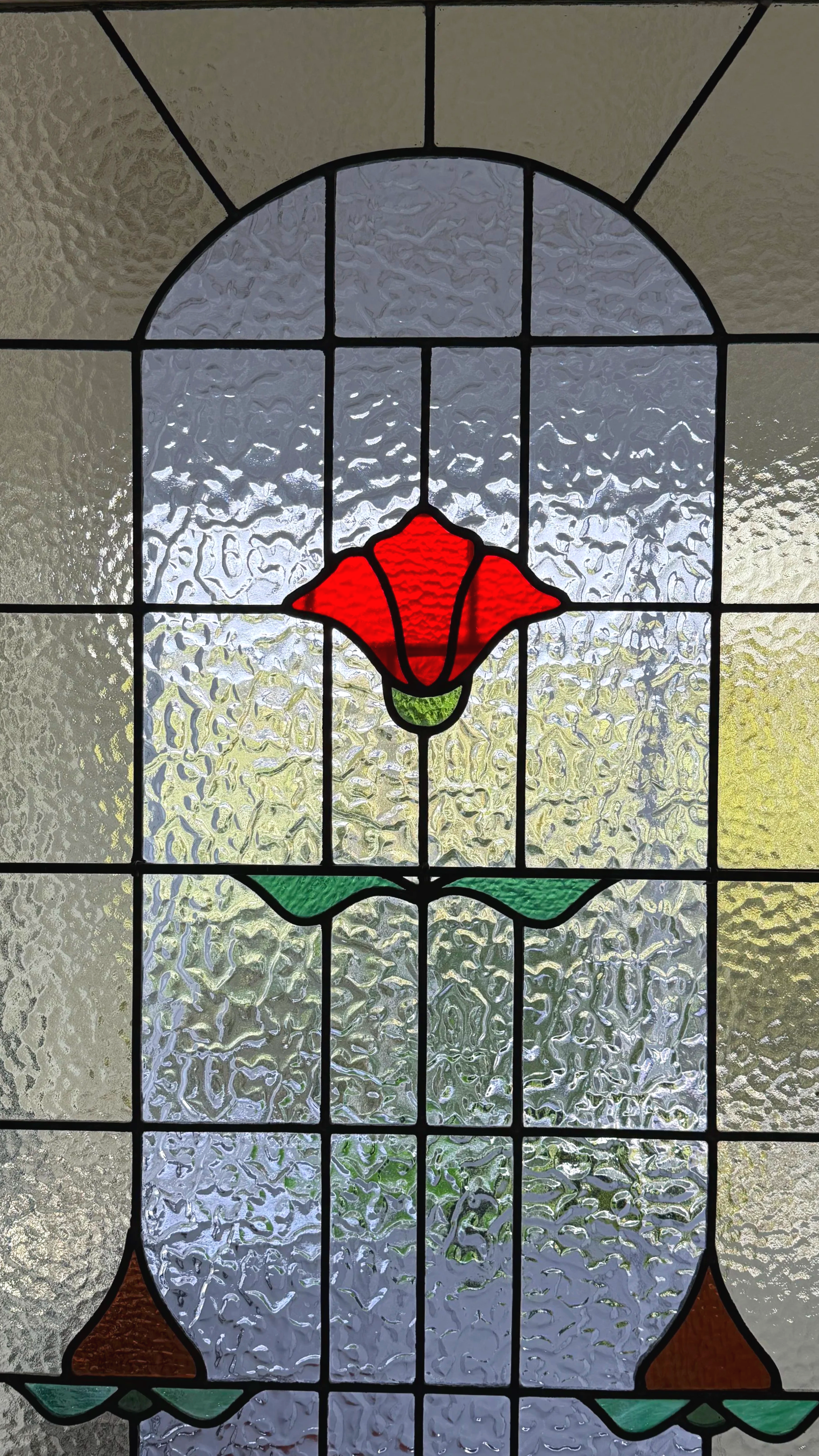
For those six months it was largely just Charles and his mother and father at home, with family friends coming and going from the big Victorian-era house his fifty-two-year-old mother loved so much – a house with patterned leadlight windows that threw rainbows on the walls.
Charles’s two much-older siblings were at university in other towns and visited when they could. His brother organised a photoshoot of the family all clustered around their mother on the bed, Charles’s sunglasses on her thinning face.
While parents might worry about their child being too close to their deterioration, Charles believes his parents did a good job of ensuring he went on with the activities he loved (art, music, Scouts, hanging out with friends), while shielding him from the worst of the illness’s effects, including from her pain meds, which brought on hallucinations and mood swings.
“Also, as I’d been part of the whole process at home it was less distressing than how I imagine it would have felt if she was in hospital. That could have felt super clinical and been quite anxiety inducing. It was such a privilege that we could have hospice care at home, in the house she really loved.”
Soon, his mother could no longer get out of bed. Charles knew what that meant – that her death was drawing near. He believes that earlier conversation with his mother about her death gave him the opportunity to be more open with his philosophy professor father, including discussing the nature of death, both physical and metaphysical.
“These conversations showed me that dying is a natural thing. My dad said Socrates said, ‘One of two things happens when you die. Either your soul goes onto somewhere else, and how can that be a bad thing? Or you just enter into a dreamless sleep where you don't have any consciousness.’ For me, seeing her natural decline and being with her through all of that felt right.”
Charles believes it was harder for his brother and sister as they experienced their mother’s deterioration between their visits more dramatically. Charles’s parents offered him some counselling, which he turned down, not thinking he needed it then. Now he’s not so sure he didn’t need it, and thinks it probably would have been helpful, especially after his mother died.
That’s a day Charles remembers very clearly. The weather had warmed, but was a bit rainy. A close family friend was upstairs with his mother, and she called down for everyone to come up.
“Having been a nurse, I think she knew Mom was about to go. We all came up and were around the bed, and Kris, the friend, said to Mom, ‘We’re all here…’ And then I remember her telling my dad, ‘She's gone now’. My brother, who’s ten years older than me, started quietly sobbing, and to me it sounded like he may have been laughing. I was instinctively taken aback, like, ‘Why are you laughing?’ I had never heard him cry like that, so I had a spin of thoughts in that moment.
“After she was gone, it was, like, ‘What do we do now?’ My brother and I walked to my best friend’s house, and I told him she had died and gave him a hug. Actually…” Charles reconsiders, “I think maybe his parents told him? I don’t remember ever directly telling my friends. I guess I wasn’t emotionally open in that way, as a fourteen-year-old boy.
“After that, my brother and I went on a very long walk to another good family friend who I took private art lessons from, and we told her. We probably walked for two hours through an overcast and humid twilight, and something about that walk with my brother, even though we didn't talk a lot, just the act of doing something and moving really helped in that moment.”
When they returned home, Charles’s mother’s body was still there, covered by a sheet. He remembers seeing some of her friends lifting the sheet to look at her. He remembers the funeral directors coming – parents of kids at his school – to take his mother away.
“I didn’t want to watch that happen. They took her down the stairs and out the front door on a stretcher. I remember being in my room overlooking the front door and suddenly wanting to look. I remember very distinctly there was a streetlight outside our house, and I could see the shape of her on the stretcher being taken away.”
A quick natural burial had been planned, followed by a memorial service a couple of weeks later. His maternal grandparents were too old to come. Charles overheard his mother say goodbye to them on the phone for what they would have known was the last time. “I remember her saying, “Bye, bye, bye, bye,” he says. Two of his mother’s three siblings had already pre-deceased their parents, and Charles’s voice saddens further thinking of his grandparents’ grief at losing three of their four children.
Charles played at his mother’s service – the minuets from the Bach Cello Suite No. 1 in G major. “I always identify that as being from her funeral, but I don’t feel weird about performing it. However, I will never hear or play that piece without thinking of that.”
The memorial was a good experience for him, he says. He felt recognised and acknowledged, but at the same time a little removed. “Having gone through the grieving process over that long period of time with her already, it felt more like I was giving support to the people who were coming along. After the service, people filed past us, and I felt very safe in myself – almost a sense of serving these people who were obviously touched and connected to Mom. I remember being less emotional than others, almost like I was helping them be able to emote and express themselves with me… I mean all that in a good way.”
Some kids from his school were there, mostly because his mother was a substitute teacher, rather than especially for him, he says. “But they came to the funeral and filed past me to say goodbye. They felt sorry for me, I guess. I was unique among my friends, having a parent die.”
Charles’s family were members of the local Presbyterian church, but more for the community than religion. “After she died the minister of the church did visit, and people were supportive of us, bringing food and things like that. Dad was probably exhausted. He had kept up his teaching at university to a certain point, I think, and then maybe he took a sabbatical?
“Then, after she died, after the funeral, after people dispersed, it was just me and him in this ginormous, empty house. There was a very quiet dynamic for a while. That’s when we would have those philosophical conversations every now and again.
“Talking on an emotional level, talking about feelings, was more challenging, I think. Even today, while we can talk openly, we don’t tend to centre our conversations in that way?” he says, asking himself the question. “It’s not that he’s the alpha-male type, but I don't remember having a lot of emotional discussions with him. But, I mean, I was a teenager… I think he was pretty well supported with family friends visiting, so that social cohesion continued.”
The support of family friends continued for Charles, too, and in this his story is pretty unusual. Where many parents’ friends melted away – some more, some less – Charles benefited from the continued attentions of his mother’s friends. Charles’s birthday is only a month or so after his mother died, and while he doesn’t remember that first birthday, his fifteenth, he remembers his sixteenth birthday the following year, and the fuss his mother’s friends made.
“We had pizza, and way more family friends came than would have otherwise, I’m sure. Kris, that family friend who was with us when Mom died, she tended to ‘mother’ me periodically. When I finished high school she gave me a card that listed what I needed to do to take care of myself – you know, ‘wash your hair, brush your teeth, eat vegetables’, that sort of thing. It was tongue in cheek, but also kind of serious, because as kind and warm as my dad was, maybe he didn't instill in me as much discipline as other families did.”
Charles’s art teacher remained a support too, especially about matters of the heart. “I sort of positioned different adults in different ways, so my art teacher was the person who fulfilled the emotional ‘talking about love and life’ role for me.”
It’s common for adults whose parent (or parents) died when they were children to feel they’re likely more self-reliant and independent than they would otherwise have been. Charles believes that too – at least in some ways, while not in others.
“Maybe it’s influenced by being the youngest child among my parents’ friends, but I had the sense of having many ‘parents’. Maybe that made me position myself – and maybe this is a fault – as looking up to older people for guidance, rather than taking responsibility for myself? To the effect that, if there are challenges in my life, I find it a bit difficult taking responsibility and being accountable.
“Certain parts of me, I feel, matured faster than others as I had a lot of independence, but another side of me looked to others to mother me. I feel those parts would be more balanced if my mother hadn’t died.”
About a year after her death, Charles’s dad reconnected with a family friend from the past. She lived in Chicago, so Charles’s dad started heading up there for weekends, leaving the now sixteen-year-old home alone. Charles says that was fine, although he’d sometimes head to a friend’s house if he didn’t want to be by himself. It did make his house the designated party house on a few occasions – but only one of them required the fire brigade to be summoned.
Just before he was due to train to Chicago to join his dad and meet his girlfriend for the first time, Charles hosted a party. Some friends had been smoking in the attic and a still-glowing butt had worked its way between the floorboards and into the insulation beneath. Charles didn’t discover that until the next morning when, during clean up, he thought the attic looked a bit hazy. Opening a window, of course, did not help.
The fire brigade came, and all hopes of keeping the situation quiet in a small town where everyone knows everyone were dashed as the firemen buzz-sawed through the attic floor to extract the smouldering insulation. Then one of the firemen stepped through the floor and, so, also the ceiling above Charles’s father’s study.
“And this was in preparation for me to go meet my potential new stepmother!” says Charles. “On the train up there, I knew I’d have to tell Dad. He was furious, but also knew he had to navigate this meeting.
“Actually, it was good because it ripped open a channel of communication between us. I felt like I had nothing to hide at that point. I could be a little more open and honest about how I was feeling, and it put me on a more adult-to-adult dynamic. I think Dad thought my friends had instigated the party, but I did enjoy hosting them. It made me feel less of an outsider.”
Soon, Charles’s dad asked him if it was okay to get remarried, and Charles “jokingly” said his father could marry when he turned eighteen. His dad remarried the day after Charles’s eighteenth birthday.
“Despite our awkward start, Alice became an important part of my life and she embraced being a mother to me as a teenager. She was kind, supportive of my studies and what I chose to pursue. Just as much, she was so uplifting for my father, and it was obvious how much she gave him a renewed sense of joy.”
At university Charles studied music, then came to New Zealand to apply for the master’s programme in performance cello. That’s when he met other young people who’d had parents die, including many fellow cellists. Seems appropriate, he jokes, as the deep tones of the cello are often used in movies for death or sombre scenes.
As Charles’s mother died in spring, he says the warming weather reminds him of the time of his mother’s death. However, the southern hemisphere spring falls between September and November, so the warmth of New Zealand’s spring can stir memories of her, perhaps lowering his mood, even though the dates no longer align.
Adding an extra blow, it was in spring that Charles received the news he hadn’t been accepted to continue into a second postgraduate year of performance music. He says that disappointment amplified the “sense of anxiety and directionlessness” he was already feeling.
He was probably depressed, Charles thinks, feeling like he was “out of whack, out of balance”. He got some counselling, something he wishes his parents had prodded him more to accept when he was younger. “Maybe some type of compulsory counselling would have allowed a more helpful pattern to have developed,” he says.
These days, living in Wellington with his partner and dogs, balancing his work life with his love of music, Charles feels he’s living as his mother hoped.
“Having my mother die so young, and me becoming aware of death so young, I feel it amplifies the importance of living well. Knowing death at such a young age amplifies the importance of everything.”
Story by Lee-Anne Duncan