
Jacqui Spence
“I told myself … my parents didn’t care enough about me to stay alive.”
Jacqui Spence’s father died when she was a baby, then her mother died when she was fourteen. Growing into adulthood with close support from family and friends, she now uses her deep powers of empathy to support others.
Jacqui Spence’s hands are small and delicate, but with those hands she has steadied countless young people who struggled as she once did.
Now in her fifties, Jacqui is a social worker who spent years in high schools while raising four children of her own. When we talk, only her youngest remains at home with her, while the others come back for meals and Mum-time, as grown-up children do.
Jacqui kindly made her way up my treacherous steps one evening, after long hours at work, to tell me her story of parental bereavement, of growing up without both her parents. Almost immediately my dog cuddled up beside her to be patted by those gentle hands, which, she shares later, are just like her mother’s.
Jacqui’s been a social worker for twenty-five years but feels like she’s been doing social work in one form or another for as long as she can remember. “I have memories at primary school of being super attuned to the ‘difficult kids’ in the class, keeping an eye on them. In truth I studied social work because, when it came to signing up for tertiary training, I didn’t want to commit to a three-year course and social work was two years. But I was already tuned into other people's difficulties and felt like it was my job to support them.”
On graduation, Jacqui worked at a residential facility for children with special needs. Nurturing, inclusive and community-focused, it was the perfect landing for a young woman who had already endured much tragedy.
Jacqui then spent five years in a similar community in the United States, after which, back in New Zealand, she and her (now former) husband ran a social welfare care home, working with teenagers and teenage mums, before moving into the area of sexual violence. So hers has certainly been a career of working with people going, and growing, through challenges.
And Jacqui knows about challenges – her father died suddenly before she turned two, and her mother died from multiple sclerosis when she was fourteen.
“I have no memories of my father, obviously. My mother was unwell on and off through my whole childhood. Actually, for the last couple of years of her life I wasn’t even with my mother because she spent those years in hospital.
“I stayed in our house for a while with my grandmother, but when it became evident my mother wasn’t coming home my family fixed up a room at my grandmother’s, establishing somewhere nice for me to be.”
A decade earlier, Jacqui’s father was seriously injured when his car hit a tree. He survived for a week before he died in hospital. He was only thirty. “His death was traumatic for a lot of people,” says Jacqui. He was well known, and she still often meets people who knew him.
“It's always weird when you meet people who knew someone significant in your life who you don't know. But there’s also something so very nice when someone says they remember this or that about my father. He was really cool, my dad, by all accounts, in his dark glasses and flash clothes and sports car. Talking to them does help build a picture of him and what he was like.
“He was the only son, the apple of his mother’s eye. For me, growing up, that was quite hard because I don’t remember my paternal grandfather ever speaking to me, and I didn’t have much to do with my grandmother. She was completely grief stricken. She used to say things to me that felt hurtful as a child. Like, ‘I want to cry whenever I see you’, and, ‘I can't bear to look at you’, as I do resemble my father.
“As an adult I know she didn't mean to say it like that, that she couldn’t help but express her grief when she saw me. But as a child I told myself all sorts of stories around why she would say that. Like, I was unworthy, and that my parents didn’t care enough about me to stay alive. That they didn’t want me enough to stay alive.”
“I’ve heard that in the hospital my father was conscious and knew he was going to die. He didn’t want to die. He was frightened. I was fifty-three before I started putting some energy towards thinking about how horrible and sad that was for him, his parents and his sisters.”
After his death, Jacqui had strong support from her mother’s side of the family – from her grandmother and her mother’s four siblings. Jacqui’s mum was a teacher and could keep herself and Jacqui financially afloat. She never remarried.
Jacqui says her mother had multiple nervous breakdowns throughout her childhood, starting with post-natal depression. A few years after her mother’s death Jacqui found her Plunket Book (the book New Zealand mother-and-baby nurses used to track a child’s early development), which recorded that during the times her mother couldn’t look after her, Jacqui was taken to a hospital that specialised in caring for babies.
Given her father was still alive then, and her mother’s family was close and supportive, that was a surprise to Jacqui. “I think I was about fifteen or sixteen when I found that out. I said to one of my aunts, ‘I had a father, and grandparents, and eight aunts and uncles, but no one could take me…?’ She was just, like, ‘I don’t know’.”
Jacqui’s mother was hospitalised for what turned out to be the last time when Jacqui was eleven. They were due to fly to Australia to see Jacqui’s maternal grandfather. With her mother in hospital, Jacqui made the trip alone.
“I’d done the trip several times with my mother, so I was fine on my own, and I think I was quite happy to go off on holiday. It had been a horrific few days before I left, as my mother had been manic and pretty outrageous. When I came back she was still in hospital, so that’s when I went to live with my grandmother.”
Jacqui’s mother had become convinced she couldn’t move, saying she had multiple sclerosis. The medical staff put it down to her psychiatric condition, but Jacqui’s grandmother, a nurse, had her daughter tested and, yes, she did have MS.
“A small percentage of people with MS have an aggressive form, and my mother had that. When I saw her after returning from Australia, she was blind. Her vision came back, and I think she could speak fine, but I don’t think she ever regained her movement. She couldn’t move at all over the next two years, at least that’s what I remember. We had to light her cigarettes for her. She smoked till the very end – I mean, why stop at that stage?”
Jacqui’s mum was then moved to a geriatric ward, despite her young age. Jacqui visited her once a week, often accompanied by a school friend who knew her mother well.
“The nurses loved my mother. They enjoyed having someone young there. She was funny and smart, and a bit different to their usual patients. I don’t know how mentally well she was towards the end. She was wasting away and she definitely wanted to die. She said pretty outrageous things to me like, you know, that I should help her die.”
Some good news is that Jacqui’s mother readied her daughter for independence. She taught Jacqui – then thirteen – how to use a cheque book. She took Jacqui through her will. Jacqui knew who the executors were and who her guardians would be.
“She was big on preparing me and ensuring I knew how to get on in life. As my only surviving parent, she thought it was important I knew those things. And I'm glad I did. I had had quite a grown-up life with her in a way, as it often is with one adult and one child. I mean, she was widowed in her early twenties and died when she was only thirty-six.”
Her mother had never got over her own loss, Jacqui is sure. Her mother belonged to a big group of single mothers, widowed and divorced, so it was quite common for Jacqui to be around kids who didn’t have two parents at home.
“But I do remember going through a phase – looking back, it's horrific – where I’d say things for shock value. Like, ‘Oh yeah, my dad's dead and my mum's dying’, and people would just be, like, ‘…What?’ But that’s what was going on for me at the time.”
As Jacqui continued to live with her grandmother – “who was now raising her sixth child, me”, with the support of her mother’s brothers and sisters – on some levels she believes she was doing fine. But on other levels, not so much.
“When I look back now, I think, ‘God, I wish someone had stuck me in some decent counselling when my mum died’. But everyone was busy in their own grief. The January night that the call came to go up to the hospice – where Mum had been shifted to – I was taken to say goodbye to her. I’m not absolutely sure, but I think she breathed her last just as I arrived.
“After she died, we left the room, and the biggest memory I have of that time is seeing my uncle breaking down, just sobbing and sobbing. It's so easy for a child to get lost in all that grief.”
Jacqui’s family then arrived from all over the world. She remembers the big family dinners leading up to the funeral as good times, even though it was tough.
“My memory of the funeral is of freaking out about what to wear, like that’s the most important thing. I was throwing clothes around – I was really agitated. I'm pretty sure my grandmother suggested I take a Valium to keep calm. I’m also pretty sure I didn’t take it…”
After the funeral, Jacqui was amazed at how people just carried on, laughing, talking, shopping, as if her mother wasn’t dead. “I remember experiencing that disconnect between my internal experience and the world just keeping on going like nothing had happened.”
Some time later Jacqui’s grandmother took her on a trip around New Zealand, and Jacqui remembers having a “massive energy release, like screaming and crying, not being able to be touched. Like a full-on freak out. I don’t know what set me off,” she says.
Then at the end of the year that began with her mum dying, Jacqui’s grandmother took her around the world, during which time she turned fifteen.
“I guess she thought it was good to do something special. They were trying to make things better for me, and I feel like I was all right on that trip.”
Through high school, Jacqui made strong and caring friendships. “I loved school. I was able and I was well behaved. School for me was a pretty good place to be, with no chaos, no drama. It was predictable. My grandmother often said, ‘Darling, I’m so pleased you've got such nice friends’.
“Now I know what she meant. It didn't just mean, ‘I like your friends’. It meant, ‘I feel better because I know you have good friends’. And I did have good friends. They were all aware of my situation and I’d often go and stay in their homes.”
Jacqui does, however, have trouble recalling details from those years. “My memory of those days is appalling. My sequencing – big chunks of my childhood are missing. Friends will talk about things that happened when we were young and I realise I must have been so checked out. I must have had a very limited ability to be interested in, and take in, other people's stuff. My memory doesn’t work as it should because of that early damage.”
She does remember going on a student exchange to Brazil in her last year of high school. And she remembers sitting in a concert hall listening to music, and crying for her father for the first time, even if she didn’t realise then who or what her tears were for.
“I think living in that family in Brazil – with siblings, a mum and a dad – I opened up and felt a loss I hadn't felt before. About my dad, I’d always said, ‘It doesn't really matter because I didn't know him, and you can't miss what you never had’. I would say that exact phrase. But then, when my first baby was the age I was when my dad died – so, only two – I was living in New Zealand and my husband was in the UK. Our son would take his dad’s photo off the shelf and carry it with him every time we left the house. He was actively missing his dad.
“I thought, ‘That was me. I was that age and this man, my dad, disappeared out of my life’. That was powerful. In terms of recognising for myself what that loss would have been like to a two-year-old, it’s there, it’s really there. I went on to do more study – brain-body work, cellular memory – and I know it’s all still in there, even though that loss was so young. Sitting in Brazil, all that came out.”
Jacqui’s mother’s large and involved family somewhat compensated for her losses, and Jacqui knows she was fortunate to have it.
“But I also think some of my feelings were put aside. It actually might have been better to have felt unlucky and to have processed fully the reality of my parents’ deaths. Being so lucky, I’m not sure I paid full attention to the loss until that time in Brazil when I was seventeen.
“I used to have fantasies about my father coming back from being in hiding somewhere and ‘finding me’. I mean, I'd been to his grave, I knew he’d died, but I hadn’t seen his body. So maybe, just maybe, they were all telling me porkies and actually he’d gone underground and was still out there somewhere?
“I didn’t really believe that, but I definitely did think it, especially after Mum died, as I think I felt like I needed a parent to be alive somewhere. I couldn’t legitimately tell myself that story about my mother, but I could with my father. That speaks to a need for belonging.”
Jacqui’s mother’s death made her officially an orphan, but that’s not how she saw herself. “I used to think, ‘I’m not an only child anymore, I’m an only family’. At fourteen my family of origin was gone, but I had too many people around to feel orphaned. From my work I now know how significant it is when the last person of your family of origin dies, no matter how old you are.”
That feeling of being left alone in the world led to her need to create a family of her own. After having her first child, Jacqui says she was “desperate for him to have a full-blood sibling”, even though her relationship with her children’s father wasn’t particularly stable. She did have a second child, then a third only seventeen months later.
“That was definitely because I didn’t have a sibling to have shared experiences with. My mother grew up with heaps of siblings and I wanted that for my children.”
While Jacqui’s main memory around her mother’s death is of her uncle’s grief, given her own delayed experience of grief she’s not suggesting her uncle should have repressed his emotions so she wouldn’t see him cry. Rather, it’s about role-modelling good emotional management, she says.
“In my social work, or with my own kids, if children see me upset and say, ‘What’s wrong?’ I fight the urge to say, ‘I’m fine’, as adults tend to do. I made a conscious decision not to do that. I say, ‘I'm not okay, but I will be. I'm sad right now because something has happened so I'm crying, but I will be okay’.
“Grieving too much is often associated with withdrawal, and that's not good for children. We need to be present, but masking it is just not helpful. I say this as both a child whose parents died and as a social worker. It’s hard to untangle now, but I know my big emotions through that time were tricky for my grandmother. Her emotions had been also very big, but I think she shelved a lot, which didn’t serve her well.
“If I had big emotions, she’d say I was being over-dramatic or melodramatic, and I shouldn’t be like that. It took me a long time to realise that, actually, she was probably fearful of where those feelings might take me. She wanted me to manage them because of her own experience with big emotions.
“She wanted to protect me from myself, but I feel like a lot of my adulthood has been spent learning how to feel emotions without vomiting them over everybody. It's been a lot of work.”
To do that work, Jacqui has had counselling, which she wishes she’d done way earlier, as well as therapies that focus on the body. “I’ve done lots of body work, energy work, yoga, and open floor dance, which is conscious movement where you tune into your own experience, sit with it and decide whether it suits you or not. Then you let it go.”
Because the experience Jacqui used to sit with was that her parents didn’t “value her enough to live”, when she was younger she always yearned “to be chosen” in relationships. She told herself that if a relationship wasn’t working, obviously the problem was her. So, if she tried harder she would be better, and so make the relationship better.
“All this can manifest in angry behaviour, and it goes on a cycle. Anger is a secondary emotion, as I tell kids I have worked with. You get angry because you're hurt or disappointed or sad. It's easier to be angry. I would get angry with my kids’ dad, angry with my kids sometimes. That all came from, ‘I’m not good enough. This wouldn’t be happening if I was good enough. You need to stop what you’re doing so I can be good enough’.
“I didn’t have the skills to manage myself when I was stuck on those feelings, so it ended up hurting other people. Now I want to be the one who chooses to be in relationships and jobs, and I do things that serve me, rather than chasing after people to prove I'm enough.”
Jacqui says she was in that cycle until well into adulthood. “Maybe I wish, with hindsight, that someone had picked up on that a bit earlier, but I’m also a great believer that things happen when it's the right time. Would I have done things differently if I was my own child? Yes. But I totally accept that this is how it happened, and I don’t have any regrets. If I'd done that work earlier, I might not have the children I have, and I might not have the job I have.
“Everything feels better now, and I can challenge my thinking around those stories of being unvalued when memories pop up.”
Part of Jacqui’s healing involved embracing family traditions – big lunches with the family, gatherings at Easter, Christmas, children’s birthdays, going on holiday to the same place, creating repeating patterns to build good memories for her own children. “Traditions don’t have to be big things, just things you repeatedly do together as a family,” she says.

While Jacqui always remembers her mother’s birthday – during which Jacqui and her daughter might light a candle to her and talk about her – one tradition she does not follow is commemorating the anniversary of her mother’s death.
“I always forget it. I’d never even been sure of the date, but I’ll often find I’m a bit hōhā (annoyed) during a time in January, and then an aunt might text saying, ‘Thinking of you on this day, darling’, and I’ll realise why. That’s body memory, which is so strong and so powerful.”
Since Jacqui and I first talked, she has found out her mother’s death date. Her beloved aunt had died and Jacqui had a strong feeling she died on the same date as her mother. Jacqui looked up her mother’s death notice and, yes, her mother died on 23 January. Her aunt had died the same day, within a few minutes of the time her mother died, in the same hospice.
Another discovery Jacqui made recently was the whereabouts of her mother’s ashes. No one had claimed them after the funeral, and Jacqui always thought, with such a big family, it was just a task that fell through the gaps. Recently she rang the funeral home to track the ashes down and was told someone had ticked the box to say they didn’t want to retrieve them.
“The funeral home had scattered them in a cemetery close to where I grew up and where I walked all the time. There’s lovely native bush there and it’s a good place for her to have been scattered. My plan had been to inter her ashes with my father and add her name to his plaque, which I may still do. But at least now I know where her resting place is.”
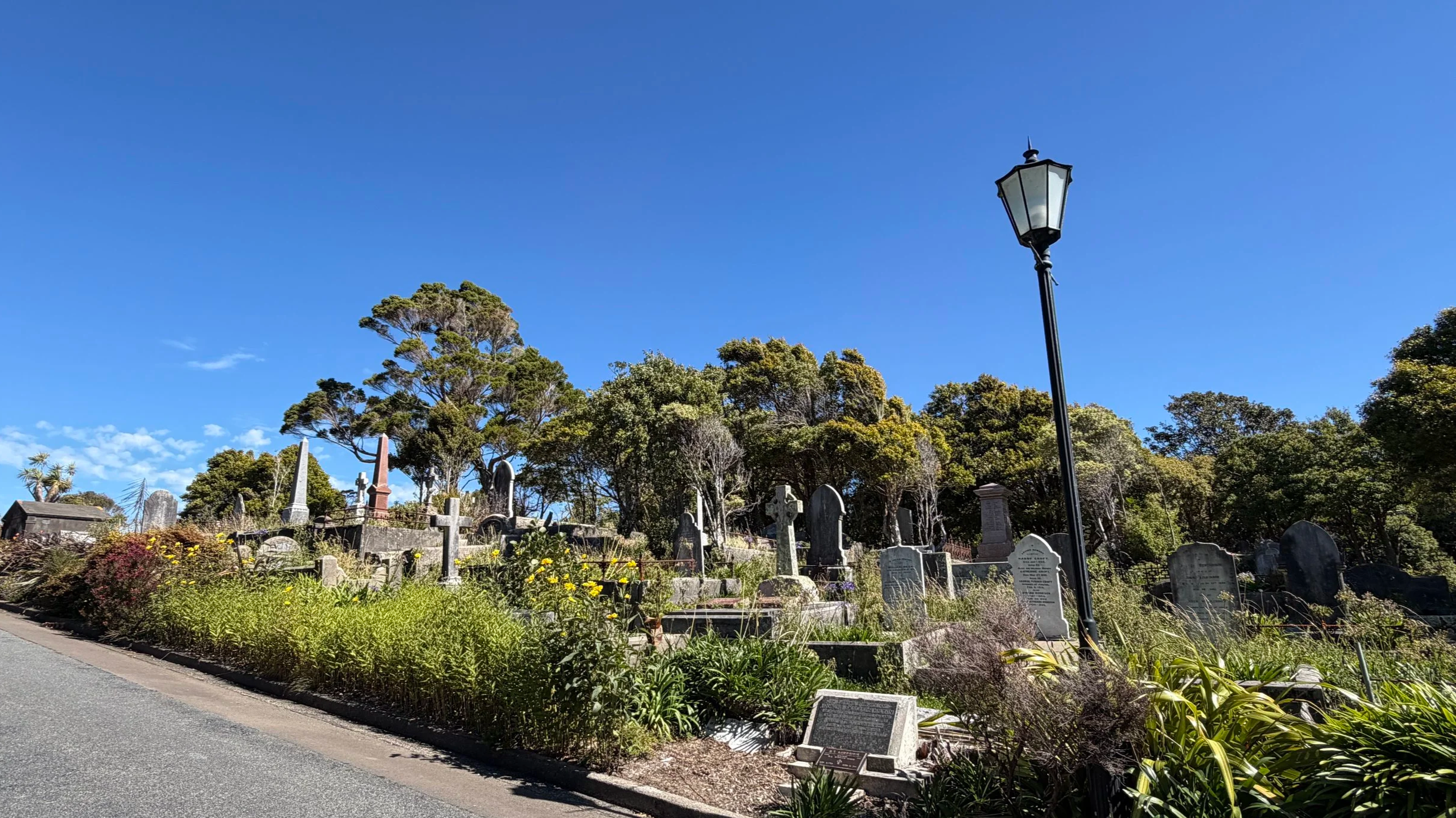
Jacqui can’t imagine what her life would be like if even one, let alone both of her parents had survived to guide her into adulthood.
“I wish my mother hadn't had such a hard time, that she could have lived her life more comfortably, with less that might have set off the MS. It must have been really sad for her. She was full of longing.
“But I love my life. I love the travelling I've done. I love the kids I've got. I love the work I've done. I don't go there very often, thinking about what I’ve lost. I’m grateful for what I have. I know I'm like my mother in many ways – including my small hands. That stuff runs deep, and a lot of the things that were important to her are strong for me, and they’re all things I like about myself, which is nice!
“I'm really thankful for everything she gave me, because it's far more valuable than the bits of me that got a bit broken along the way.”
Story by Lee-Anne Duncan